How to start painting as an adult: should you choose acrylic, watercolour or oil?
If you are starting to paint as an adult, reach for acrylic first: it dries in tens of minutes, thins with water, and any mistake can simply be painted over. Watercolour requires the least equipment, but is the least forgiving of errors. Oil gives you the most time to blend colours, yet asks for more patience and materials. The best way to compare all three is to try them under the guidance of a teacher.
Key takeaways
- Acrylic is the most accessible starting point: it dries in tens of minutes, thins with water, and mistakes can be painted over with another layer.
- Watercolour requires the least equipment, but is the hardest to correct — light areas must be left unpainted from the start.
- Oil dries over days or even weeks. You gain time to blend colours, but need more materials and patience.
- On the adult course at the ARTIZO art studio, all three techniques are available and materials are included in the price.
Which technique should you start with if you have never painted before?
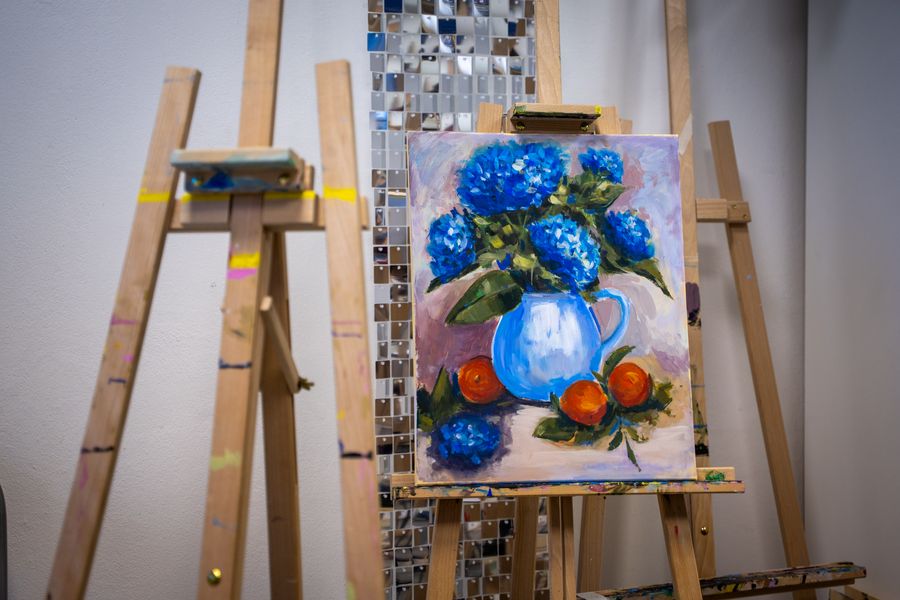
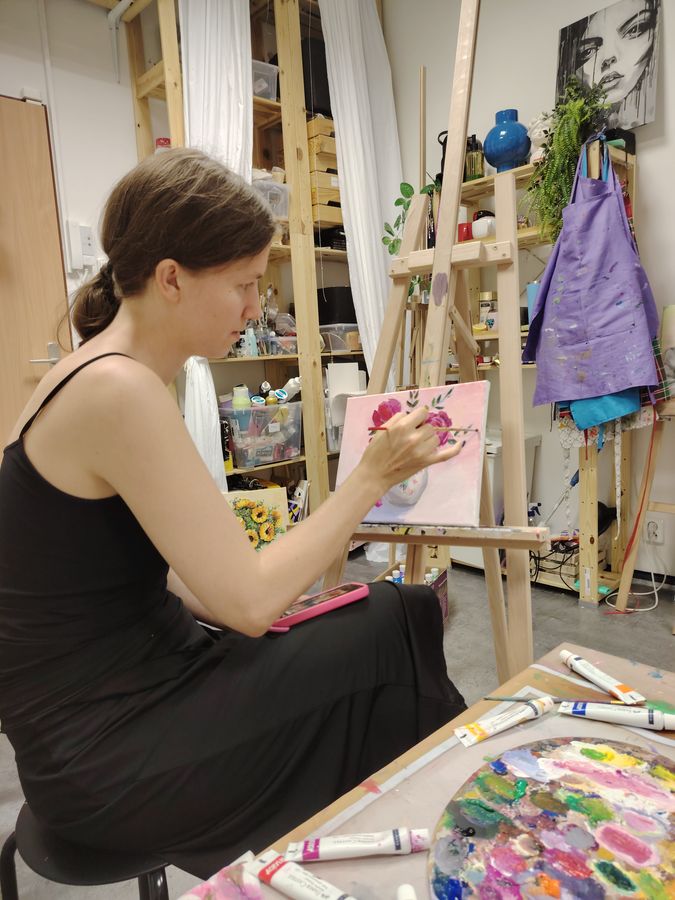
If the last time you held a brush was at primary school, the most natural starting point is acrylic on canvas. Acrylic paints dry in tens of minutes, require no smelly solvents, and — most importantly for a beginner — any mistake can simply be painted over with another layer.
That does not mean watercolour and oil are only for advanced painters. Each technique teaches something different: acrylic builds confidence and layering, watercolour teaches you to work with water and the light of the paper, oil teaches slow blending of tones. They differ above all in how forgiving they are at the start.
That is why we often start with acrylic on our Acrylic Painting Evening and in the opening lessons of the adult course.
How do acrylic, watercolour and oil differ?
The three most popular painting techniques differ mainly in how quickly they dry, how mistakes are corrected, and what materials you need. The table below compares them from the perspective of a complete beginner.
| Technique | Drying time | Difficulty for a beginner | What you need |
|---|---|---|---|
| Acrylic | Drying time tens of minutes | Difficulty for a beginner low — mistakes can be painted over with another layer | What you need canvas or heavy paper, synthetic brushes, a palette and water |
| Watercolour | Drying time minutes, depending on the amount of water | Difficulty for a beginner higher — light areas must be left unpainted from the start | What you need watercolour paper, a few colours, a soft brush and water |
| Oil | Drying time days to weeks, depending on the thickness of the layer | Difficulty for a beginner medium — colours can be worked for a long time, but the painting develops more slowly | What you need canvas, brushes, oil or solvent and a well-ventilated room |
Drying time varies depending on layer thickness, surface and room humidity. Treat it as a guide rather than a precise figure.
Why is acrylic the most accessible medium for beginners?
Acrylic is thinned with water, and brushes wash out with water too — as long as the paint hasn’t dried on them. Once a layer has dried, it won’t dissolve again, so you can paint freely over it.
Fast drying has two sides. In a single evening you can complete the ground layer, main shapes and details. Soft transitions between colours, however, need to be blended before the paint dries.
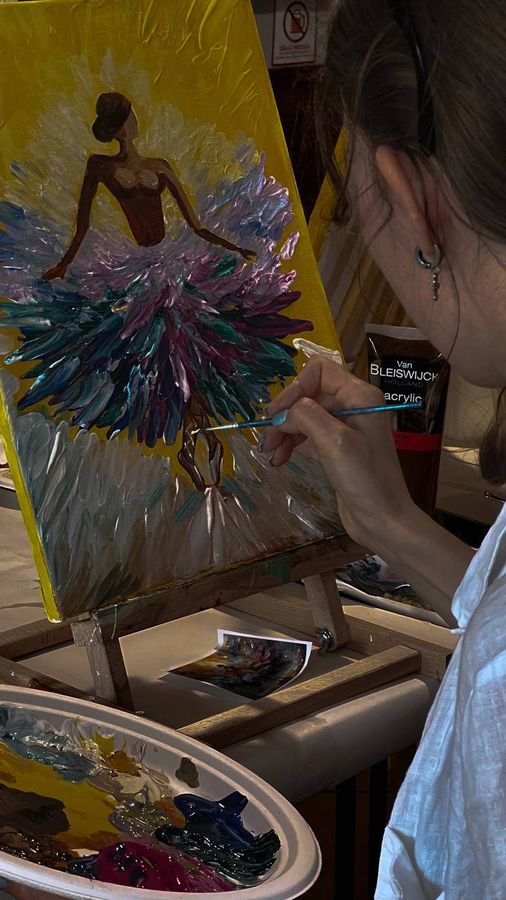
Bear in mind that acrylic darkens slightly as it dries. This is not a flaw, and your eye will adjust after a few paintings.
At the creative painting evening — the Acrylic Painting Evening, everyone paints the same motif step by step and takes the finished painting home that very evening.
Is watercolour suitable for beginners?
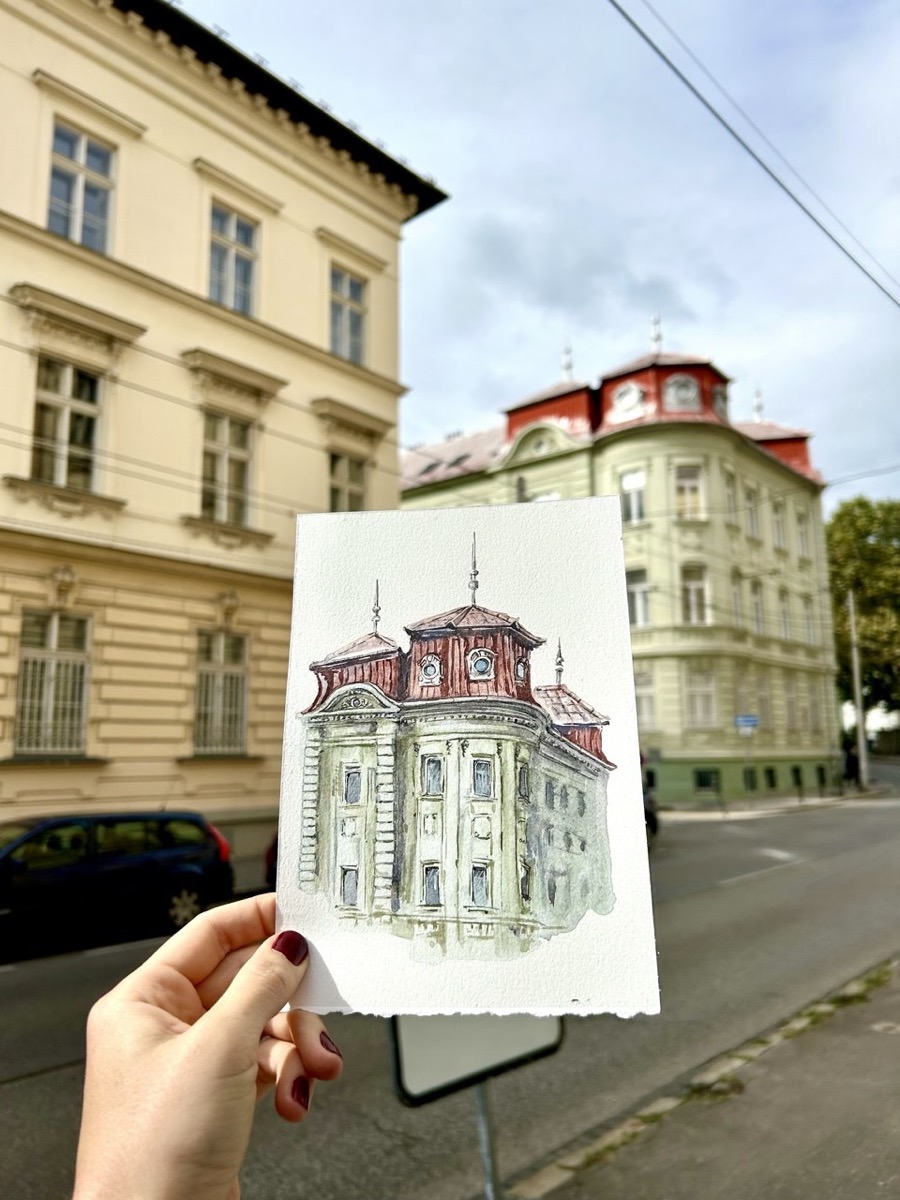
Watercolour is appealing for its lightness and translucency, yet it is paradoxically one of the more technically demanding disciplines. You cannot cover light areas with white paint — you must leave them unpainted from the start, because in watercolour the paper itself is the white.
You work with plenty of water on quality cotton paper, building up from light tones to dark. The water does part of the work in its own way. Watercolour cannot be fully controlled — what you can learn is how to work with it.
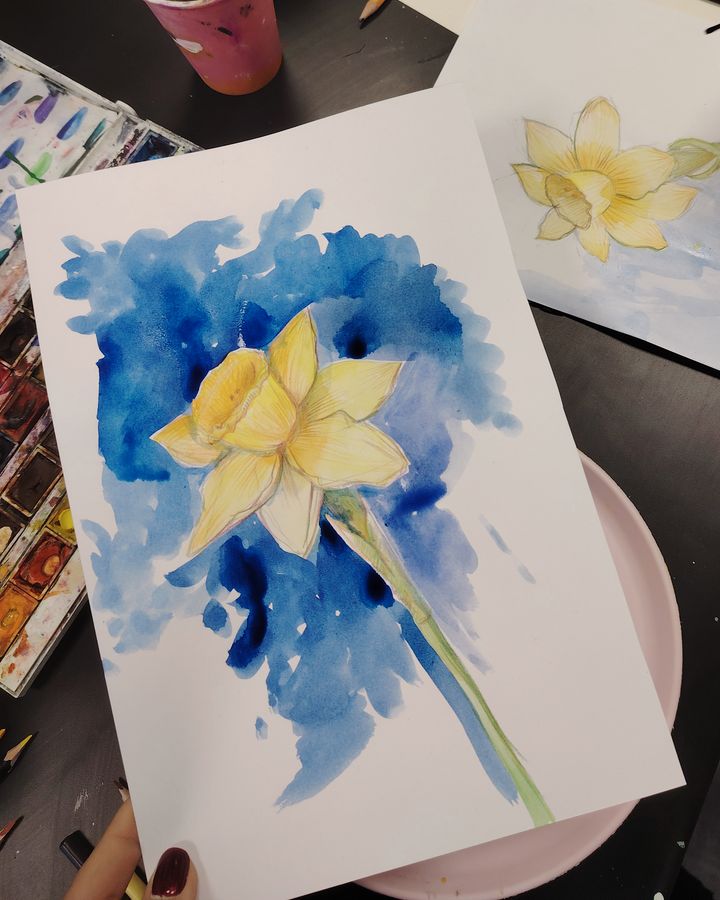
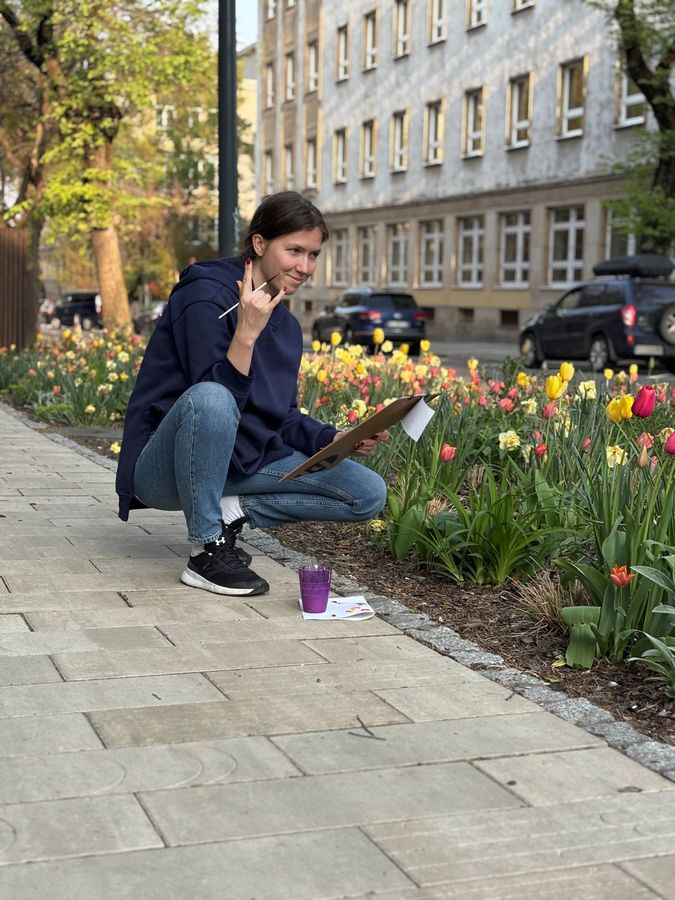
Once your teacher shows you how to work on a wet ground and layer glazes, watercolour becomes addictive. Another advantage is the minimal kit: paints, a brush and a pad all fit in a bag, so you can paint outdoors too.
We dedicate a full workshop to it: Watercolour and watercolour sketching.
When does it make sense to start with oil painting?
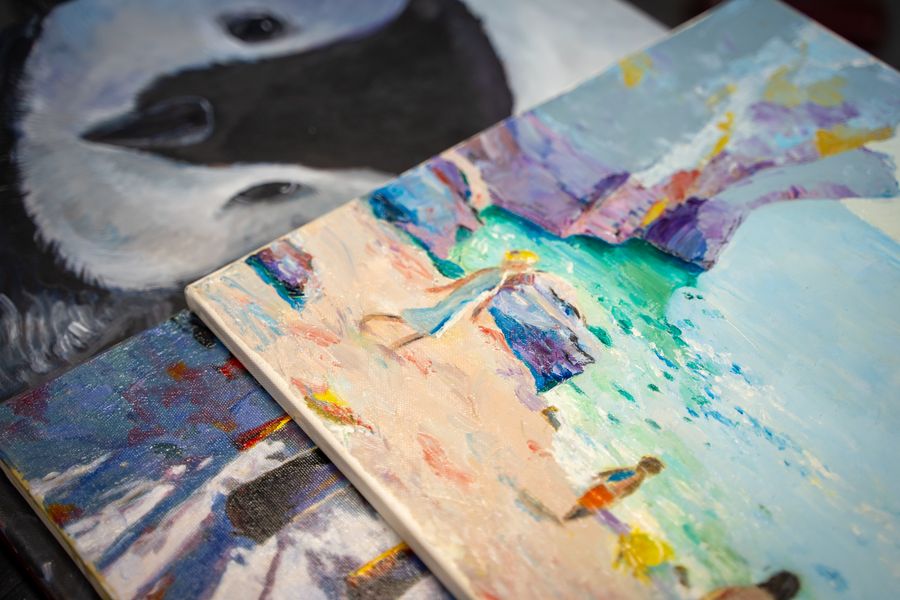
Oil painting offers exceptional depth of tone and a long drying time, which allows you to blend colours smoothly on the canvas and model light for hours.
That time comes at a price: patience. A layer takes days or even weeks to dry, and a painting develops over multiple sessions. You will also need oil or solvent and a well-ventilated room.
Oil is worth it if you are drawn to portraits, still lifes and subtle transitions of light and shadow, and a slower pace suits you. If you want your first painting finished in a single evening, start with acrylic and return to oil later.
What to buy if you want to paint at home?
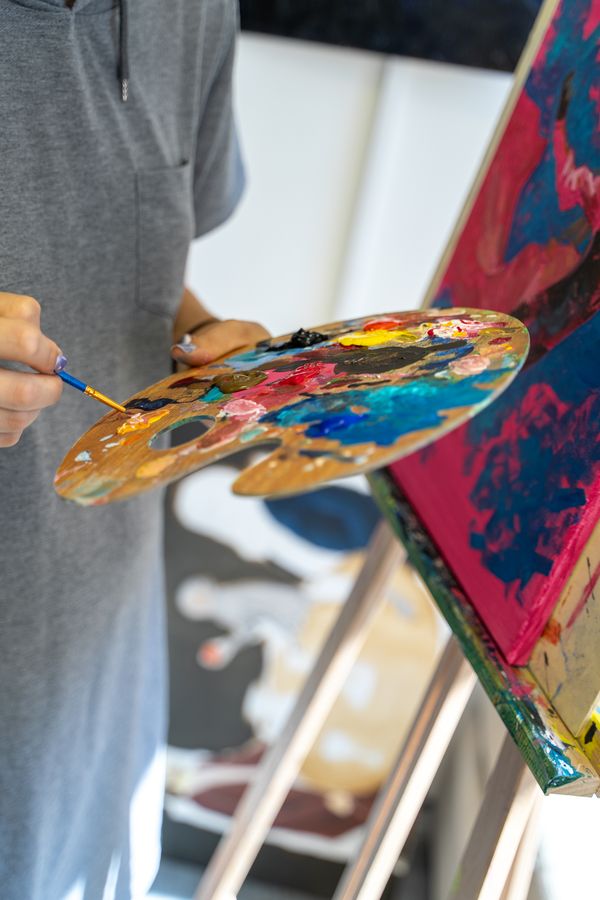
You don’t need much to start. For acrylic, a few basic colours — white, yellow, red, blue and one dark — two or three synthetic brushes of different widths, a palette, and a canvas or heavier paper will do.
With watercolour, economise on paints rather than on paper. Thin paper buckles under water and will ruin even a well-mixed colour.
Hold off on oil at home until you have tried it first. It requires the most kit, and it is worth knowing in advance whether its pace suits you.
At ARTIZO art studio you don’t need to buy any materials in advance — everything is included in the price of every lesson.
Can you learn to paint as an adult?
Yes. Painting is a craft that can be learnt at any age. Line, light and shadow, colour mixing and composition are skills, not innate gifts.
Adults do have one advantage: they can focus and ask questions. The most common obstacle is rarely the hand itself — it is the fear of a blank canvas and comparing oneself to others.
Consistency is what helps. You learn to draw and paint by drawing and painting every week — with a clear plan and a teacher who knows you.
How to try all three techniques at the ARTIZO art studio?
On the Drawing & painting for adults course you have acrylic, watercolour, oil, and dry pastel at your disposal, so under Alina’s guidance you can try every technique and discover which suits you best.
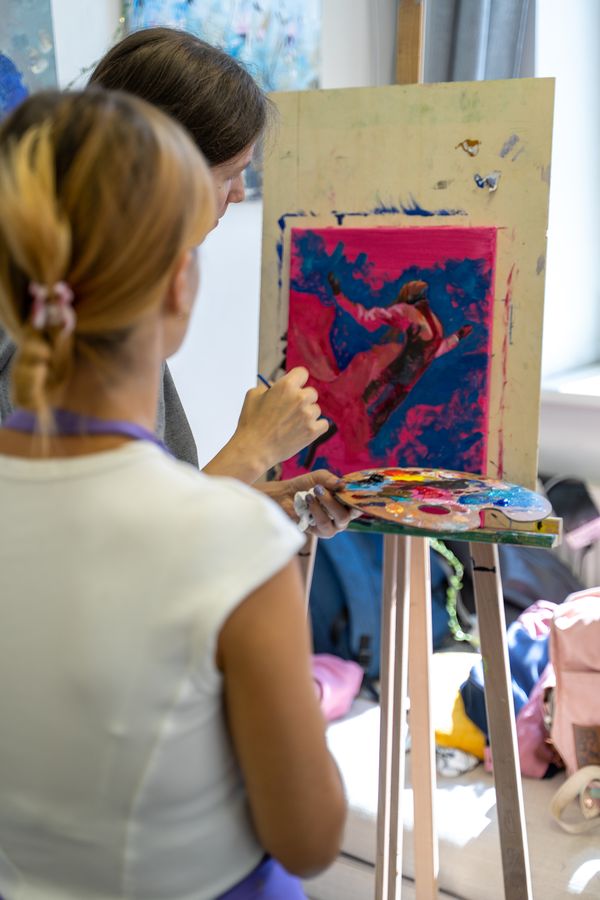
Each lesson lasts 2 hours, the group has at most 8 people, and we start from the very basics. The first trial lesson costs €20, a pack of 5 lessons costs €150, and all materials are included.
The studio is at Radlinského 27 in Bratislava. The course runs once a week and you can join at any time.
Frequently asked questions
Do I need to know how to draw before I start painting?
No. On the course we start from the basics and everyone progresses at their own pace. The group is small, so Alina has time for everyone.
What should I bring to the trial lesson?
Nothing. All materials are included in the lesson price and you will find everything in the studio.
How much does the trial lesson for the painting course cost?
The first lesson of the Drawing & painting for adults course costs €20 instead of €40. If you enjoy it with us, you continue with a pack of 5 lessons for €150.
Can I try several techniques on the course?
Yes. Techniques covered on the course: pencil, coloured pencils, charcoal, ink, markers, dry and oil pastel, watercolour, acrylic, oil, texture paste, and sketching.
Can I take my painting home straight after the Acrylic Painting Evening?
Yes. Acrylic dries quickly, so you can take your finished painting home that same evening.