Can you learn to draw as an adult: where to start and what is academic drawing?
Yes. Adults can learn to draw: drawing is a skill that can be learned at any age — it rests on observation, not on inborn talent. Start with line and simple solids, then move on to proportion, perspective and shading. Draw from real objects, not from photographs, and draw briefly and regularly rather than at length now and then. Those who have someone to point out their mistakes progress faster.
Key takeaways
- Drawing is a skill: line, proportions, perspective, light and shadow can all be learnt at any age.
- Academic drawing progresses from simple forms to still life and a plaster head — always from life.
- To begin, all you need is a pencil, an eraser, and paper. Consistency matters more than equipment.
- The Academic Drawing course at the ARTIZO studio: once a week, 2 hours in a group of up to 8 people, trial lesson €20.
Do you need talent to draw?
Not in the way the word is usually meant. What looks like talent from the outside is usually hours of observation and practice.
Drawing rests on several skills that can be trained separately: drawing a confident line, measuring proportions, placing an object in space, and using shading to give it volume.
An adult beginner has one advantage: they understand explanations and can practise with purpose. What holds them back is more often impatience with their first unsuccessful drawings.
You are not starting from scratch, either. You learnt to write by hand in exactly the same way — by repeating shapes until your hand remembered them.
What is academic drawing?
Academic drawing is the classical method by which artists learn to draw: from simple forms to complex ones, and always from life rather than from a photograph.
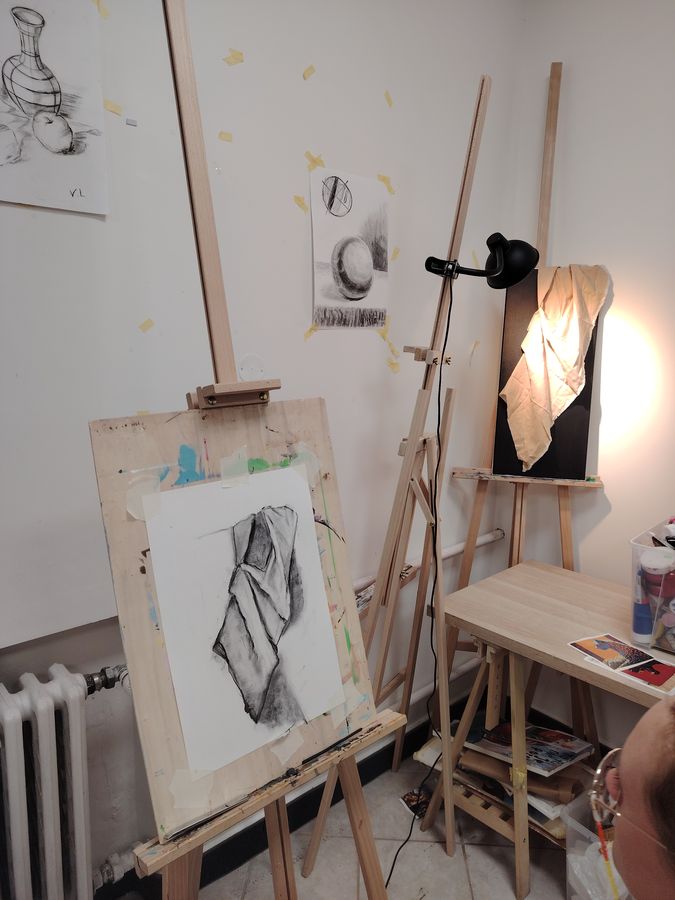
It begins with geometric forms — a cube, a cylinder, a sphere. Through these you understand perspective and how light behaves on an edge compared with a curved surface. Then comes still life, drapery, and a plaster head. Each exercise adds one new challenge: still life introduces the relationships between objects, drapery the soft transitions of shadow, and the head the proportions of the face.
It is not a style you must draw in forever. It is a foundation from which you can move on to illustration, comics, urban sketching, and painting.
Where to begin if you have never drawn before?
With line. Draw straight lines, arcs, and ellipses freehand, moving from the shoulder rather than the wrist. A confident line is the foundation of everything else.
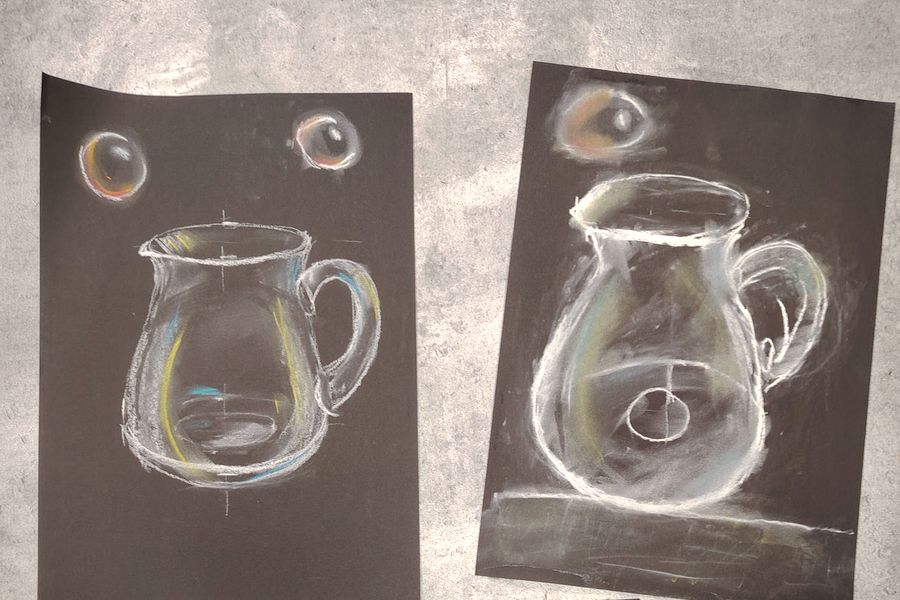
Then come simple objects from the kitchen: a mug, a box, a bottle. Each is a cylinder, a cuboid, or a combination of the two.
Measure with a pencil held at arm’s length: compare the height of the object with its width, then transfer that same ratio to the paper. Experienced draughtsmen use this method too.
Only then add shadow. Determine where the light is coming from and distinguish three tones: light, mid-tone, and shadow. Three tones are enough to give a mug on paper a sense of volume.
Learning on your own, from videos, or on a course?
Each approach offers something different. The table below compares them from the perspective of an adult beginner.
| Approach | What you gain | What to watch out for | Best suited to |
|---|---|---|---|
| On your own, from life | What you gain your own pace and many hours of practice | What to watch out for your own mistakes are hard to spot | Best suited to those who already have the basics |
| From videos and books | What you gain step-by-step guidance, available any time | What to watch out for no one corrects your drawing, and it is tempting to copy from the screen | Best suited to as a supplement between lessons |
| Course with a teacher | What you gain correction directly at the easel, a model and studio lighting, a regular rhythm | What to watch out for a fixed time each week | Best suited to beginners and those who have got stuck |
The approaches are not mutually exclusive. A course gives direction and correction; drawing at home between lessons gives hours of practice.
How often should you draw, and when will you see progress?
Regularity matters more than duration. A short drawing session every day will do more than one long afternoon every now and then.
Progress in drawing is rarely smooth. The eye improves faster than the hand, so for a while you will notice more mistakes in your own drawings than before. That means you are learning, not getting worse.
Date your drawings and keep them. When you place your first mug study next to the one you draw a month later, you will see the progress yourself.
What do you need for drawing at home?
Very little. Two or three pencils of different hardness — for example HB, 2B, and 4B — a kneaded eraser, a sharpener, and paper with a fine grain.
Pin the paper to a board and prop it at an angle so you are looking at it straight on. When paper lies flat on a table, proportions become distorted.
Charcoal, ink, and pastel can wait. Every new material brings new challenges, and pencil will teach you the essentials.
How is drawing taught at the ARTIZO art studio?
The Academic Drawing course is for adults: for beginners, for those returning to drawing, and for those who want to progress further. It moves from line and simple shapes through proportion, perspective, light and shadow, all the way to still life and the plaster head.
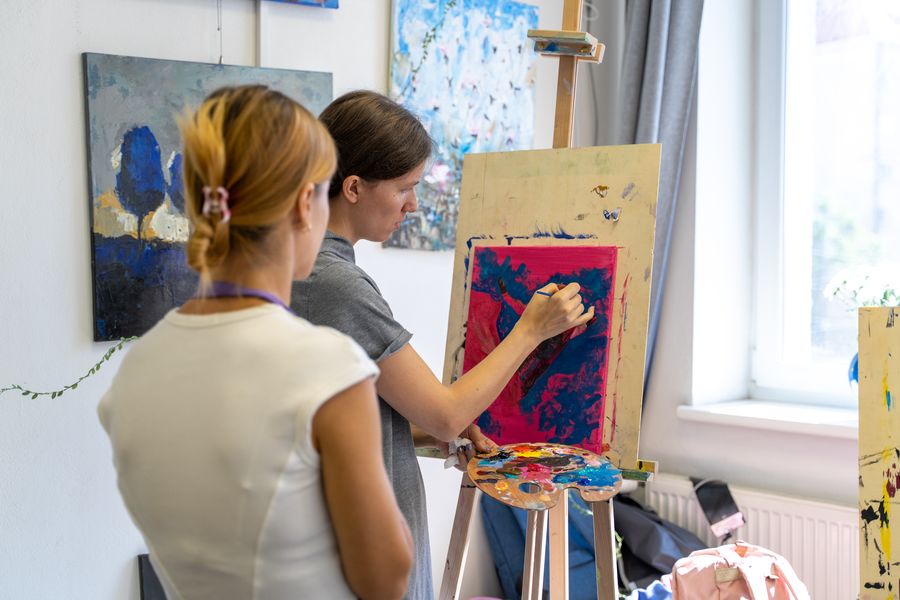
Each lesson lasts 2 hours, the group has up to 8 people, and the course is led by Alina Koroleva. A single lesson costs €40, a pack of 5 lessons costs €150 and is valid for 2 months from the first lesson. A trial lesson costs €20. Materials are included.
The course runs on Mondays and Tuesdays at 17:00, Wednesdays and Thursdays at 19:00, and Saturdays at 12:30 at the studio at Radlinského 27 in Bratislava. The time slot is arranged individually. Twice a year, in September and June, there is a vernissage of students’ work.
If colour appeals to you alongside drawing, the Drawing & painting for adults course costs the same and adds painting. If you are aiming for art school, take a look at entrance exam preparation.
Frequently asked questions
I have never drawn before. Can I manage academic drawing?
Yes. The course starts from line and simple shapes, and everyone progresses at their own pace.
What should I bring to the trial lesson?
Nothing. Materials are included in the lesson price and are available in the studio.
How much does the adult drawing course cost?
A trial lesson costs €20, a single lesson €40, and a pack of 5 lessons €150. The pack is valid for 2 months from the first lesson.
What is the difference between the Academic Drawing course and the Drawing & painting course?
Academic Drawing focuses purely on drawing: proportions, perspective, light and shadow. In the Drawing & painting course, we also work with colour and paint. The price is the same.
What if I miss a lesson?
Let us know at least 24 hours in advance and you can make up the lesson at another time while your pack is still valid.