How to prepare for art school entrance exams: what to put in your portfolio and what to draw?
You prepare for art school entrance exams by drawing regularly from life and by building a portfolio that shows your own artistic voice alongside the studies. The foundation is academic drawing: construction of form, perspective, proportion, light and shadow. Start at least 6 to 12 months before the portfolio is due, and do not rely on copying photographs.
Key takeaways
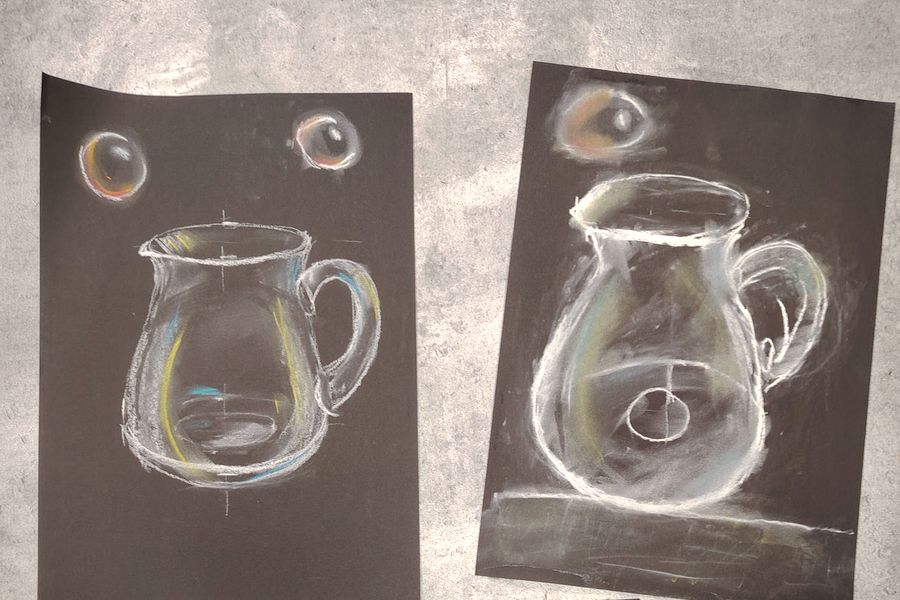
- Draw from life — still life, plaster head, figure. The panel will recognise work copied from a photograph.
- The foundation is academic drawing: construction of form, linear perspective, proportion, light and shadow.
- Alongside studies, the portfolio shows sketchbooks, colour composition and your own artistic voice.
- Start 6 to 12 months in advance: applications to VŠVU and FAD STU are submitted by the end of November, to ŠUP in February.
- At the ARTIZO studio, the 12–15 group prepares for ŠUP and the 16+ group for VŠVU and FAD STU. The trial lesson is free.
What does the panel look for at entrance exams?
The entrance exam does not test whether you can copy a reference accurately. It tests whether you can see form in space and transfer it to paper: place an object, measure proportions and determine where the light falls on it.
The essential foundation is therefore academic drawing: an understanding of the construction of form, linear perspective, proportion and the modelling of volume through light and shadow.
The second pillar is the home portfolio. Alongside skill, it should also show what interests you and how you think visually.
How do the exams at ŠUP, VŠVU and FAD STU differ?
The preparation fundamentals are the same: drawing from life, composition and portfolio. What differs is the age of applicants, the calendar and the format of the exam.
| School | Calendar | What the exam tests | Preparation at ARTIZO |
|---|---|---|---|
| ŠUP — secondary school, pupils in years 8 and 9 | Calendar application in February, exams in March | What the exam tests still-life drawing, colour composition, modelling and work done at home | Preparation at ARTIZO 12–15 group |
| VŠVU — bachelor’s degree programme | Calendar application by the end of November, portfolio in December, then two rounds of exams | What the exam tests portfolio and home assignments, practical tasks and interview at the school | Preparation at ARTIZO 16+ group |
| FAD STU — bachelor’s degree programme | Calendar application by the end of November, entrance exam in January | What the exam tests pencil drawing from a set subject (bust, still life), spatial composition (architecture) or a creativity test (design), and a general knowledge test on architecture, design and art | Preparation at ARTIZO 16+ group |
The table is for guidance only. The exact tasks, number of works and deadlines for a given year are published by the school, and what the school states always takes precedence.
Why is copying photographs not enough?
A common mistake among applicants to art schools and architecture programmes is relying on copying photographs from a screen. The admissions panel can immediately tell the difference between a drawing copied from a flat photograph and one made by observing a real three-dimensional object in space — a still life, a plaster head or a live figure.
A photograph does part of the work for you: it flattens space, fixes proportions and simplifies light. When drawing from life, you must make all these decisions yourself — and that is precisely what shows at the exam.
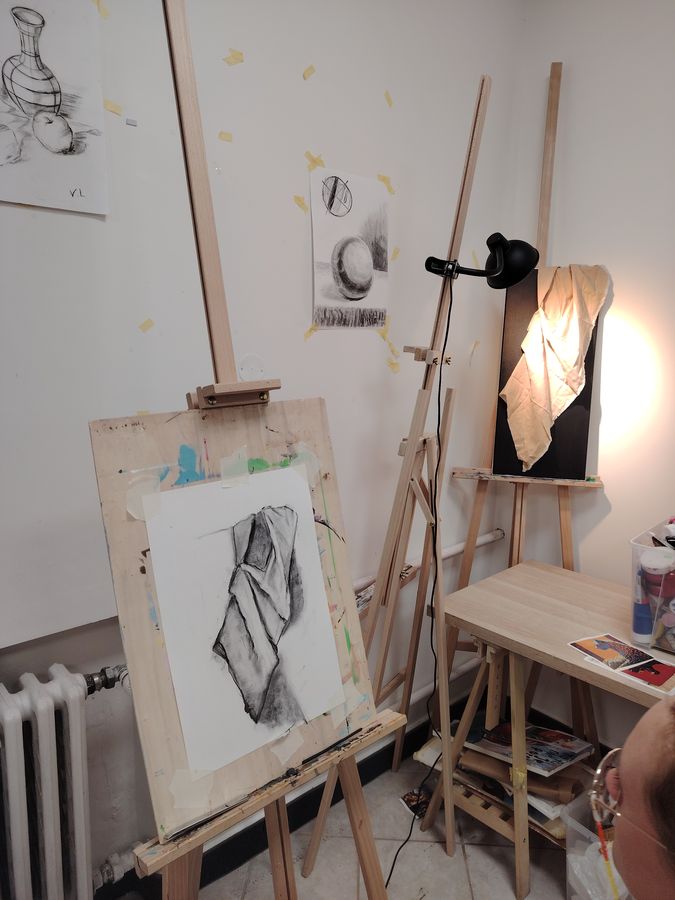
Set up a simple still life at home: a mug, an apple, a box, a piece of fabric and a single lamp to one side. Draw it from different positions and in different lighting.
What to include in your portfolio and how many works?
Your home portfolio should not be merely a collection of similar studies — it should also show your own artistic voice, sketchbooks, and colour composition.
A good selection rests on three things. First, studies from life — still life, head, figure. Second, works exploring colour and composition. Third, free works on a theme of your own choosing and a sketchbook that shows how you observe every day.
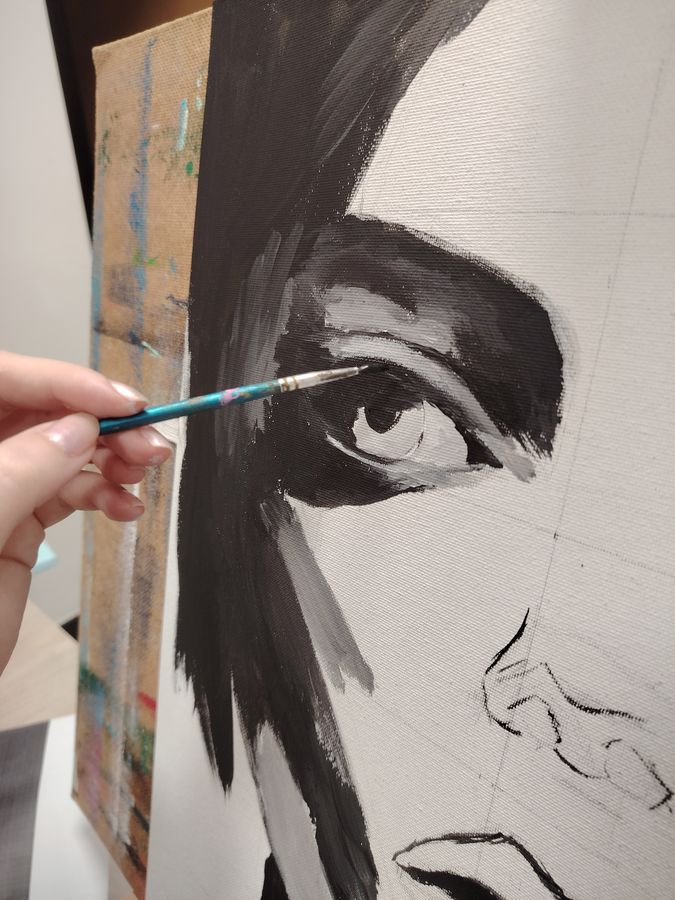
Be selective. A weaker piece undermines the whole, so it is better to show fewer works that you stand behind. Date your drawings — the sequence shows how you have progressed.
When should you start preparing?
We recommend starting preparation at least 6 to 12 months before the portfolio submission deadline. For VŠVU and FAD STU, applications are submitted as early as the end of November and entrance exams follow in winter; for the secondary art school ŠUP, applications are submitted in February and exams take place in March.
Pupils aiming for ŠUP would therefore do well to start in autumn. The earlier you begin, the more works you will have for your portfolio.
If you have decided late, focus on what can still be done: regular drawing from life and a selection from what you already have. Deadlines for VŠVU and FAD STU can be found on the preparation for 16+ page, and for ŠUP on the preparation for ages 12–15 page.
Can you prepare for entrance exams without a course?
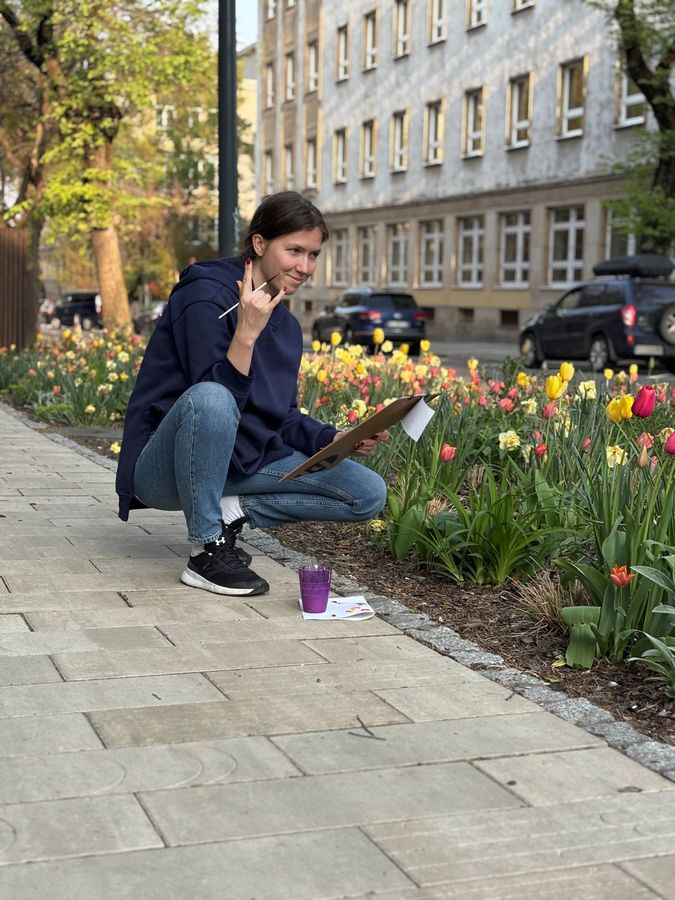
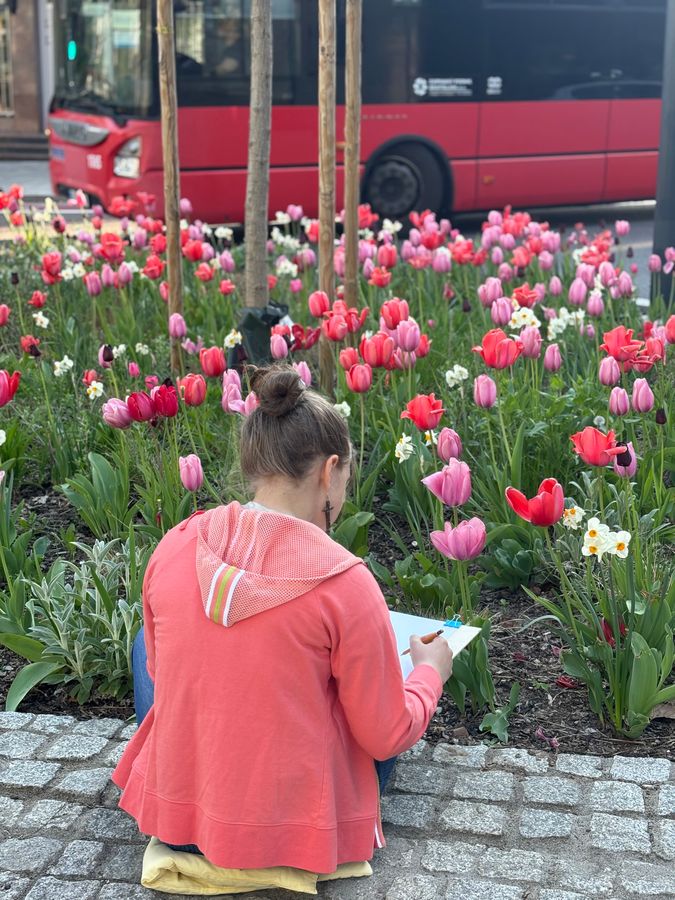
You can manage part of the preparation on your own: draw every day, carry a sketchbook with you and draw people, streets, and objects around you.
What is harder is seeing your own mistakes. A shifted proportion or an imprecise perspective is difficult for the artist to notice in their own drawing until someone points it out.
That is why regular feedback from someone who teaches drawing makes sense — whether at a basic art school, in a studio, or through an individual consultation.
How does preparation work at ARTIZO?
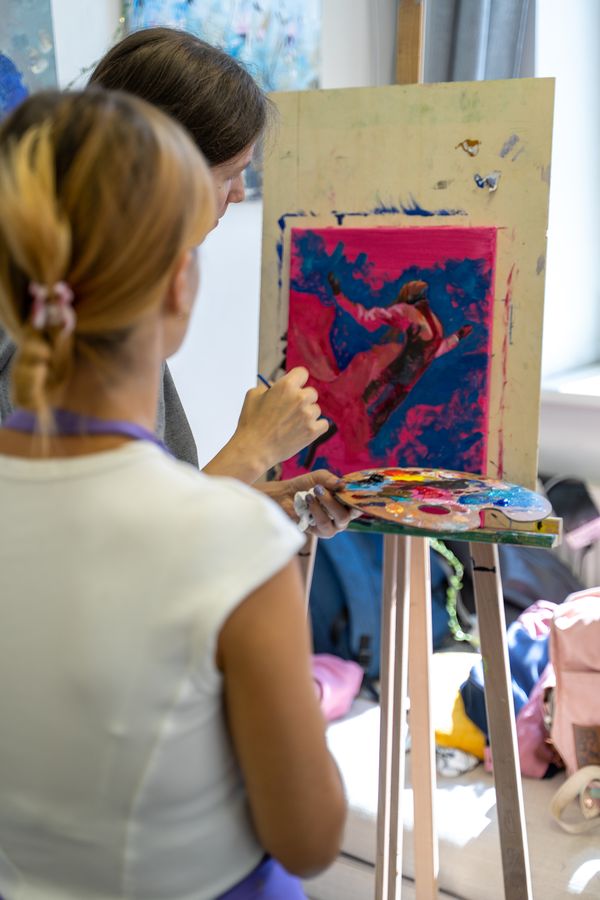
At the studio we prepare young people aged 12 to 15 for secondary art schools (ŠUP) and students aged 16+ for higher education. You can start with a free trial lesson. Students aged 16+ may also arrange an individual portfolio consultation outside the group: 60 minutes for €30.
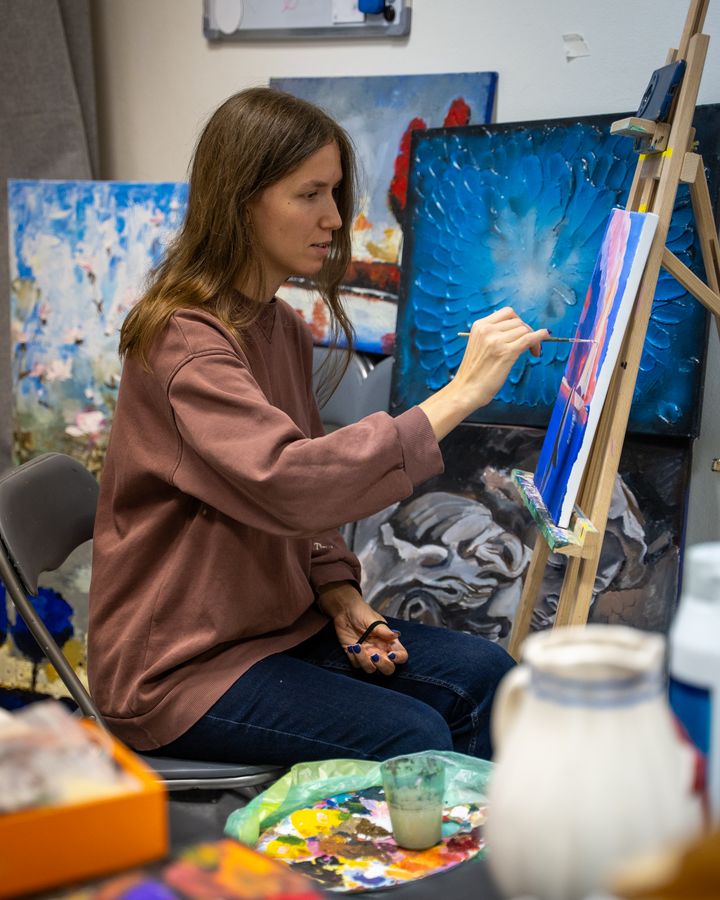
The 16+ group draws from life, works on composition in two and three dimensions, and assembles a portfolio. The 12–15 age group draws still life, creates colour compositions, and works with polymer clay — as preparation for the third task of the entrance exam.
Each lesson lasts 2 hours, groups have up to 8 people, and materials are included in the price. A single lesson costs €25, a monthly subscription €80 (4 lessons), and a 4-month subscription €288 (16 lessons).
We teach in Slovak, English, Ukrainian, and Russian, and we also practise specialist terminology in Slovak. We do not promise admission — no one can. ARTIZO is not affiliated with any of the schools mentioned.
Adults who wish to build a foundation in drawing without entrance exams will find it in the Academic Drawing course.
Frequently asked questions
Does preparation guarantee admission to the school?
No. No one can guarantee admission. Preparation will help you arrive at the exam with confidence: with regular drawing from life and a portfolio you stand behind.
How many works should be in the portfolio?
The exact number and format are set by the school, so read its requirements before you begin selecting.
How much does preparation for entrance exams at ARTIZO cost?
A single lesson costs €25, a monthly subscription €80 (4 lessons), and a 4-month subscription €288 (16 lessons). The trial lesson is free and materials are included.
Do I need to be able to draw well already?
No. Everyone starts from where they are. In a group of up to 8 people, Alina has time for each student.
Do you also prepare students for other art schools?
Yes. We will go through the entrance requirements of other art schools in Slovakia and the Czech Republic together at the trial lesson.